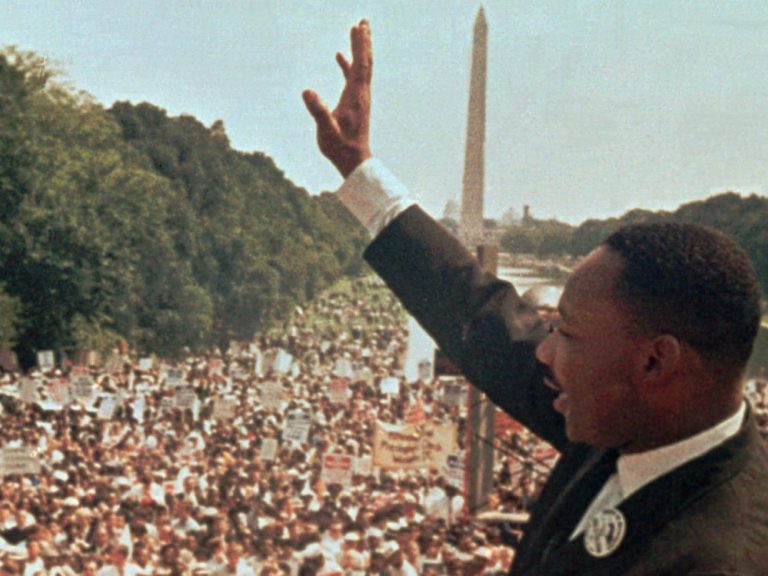
Long before Martin Luther King Jr. Day became a federal holiday, it was an idea rooted in grief, resistance, and relentless hope.
Just four days after Dr. King was assassinated in 1968, legislation was introduced to honor his life and work. But recognition didn’t come easy. It took 15 years for the federal government to approve the holiday and another 17 years before all 50 states fully recognized it. That long road says a lot about the fight to preserve Black history and the power it takes to protect it.
On November 2, 1983, President Ronald Reagan signed the King Holiday Bill into law, officially designating the third Monday in January as a federal holiday. Today, MLK Day stands apart as the only federal holiday also recognized as a National Day of Service, encouraging people across the country to volunteer, uplift communities, and put Dr. King’s teachings into action.
Artists played a major role in keeping Dr. King’s legacy alive during those years of waiting. Just days after his assassination, Nina Simone performed a haunting tribute that captured the nation’s heartbreak. Duke Ellington honored Dr. King through his composition Three Black Kings, later brought to life through an Alvin Ailey ballet in 1976. Even global artists like Bono would later reflect on King’s impact, correcting a lyric mistake in a song about the assassination, acknowledging the weight of telling that story correctly.
But few were as instrumental as Stevie Wonder. Determined to see Dr. King honored properly, Stevie went on tour to raise awareness and pressure lawmakers. His song “Happy Birthday” wasn’t just a celebration; it became a rallying cry. Released on his Hotter Than July album, the song helped mobilize public support and pushed the movement forward.
Today, MLK Day is more than a day off. It’s a reminder of how long justice can take and how art, activism, and community can move a nation closer to doing what’s right. Dr. King’s dream lives on not just in speeches, but in service, creativity, and collective action.