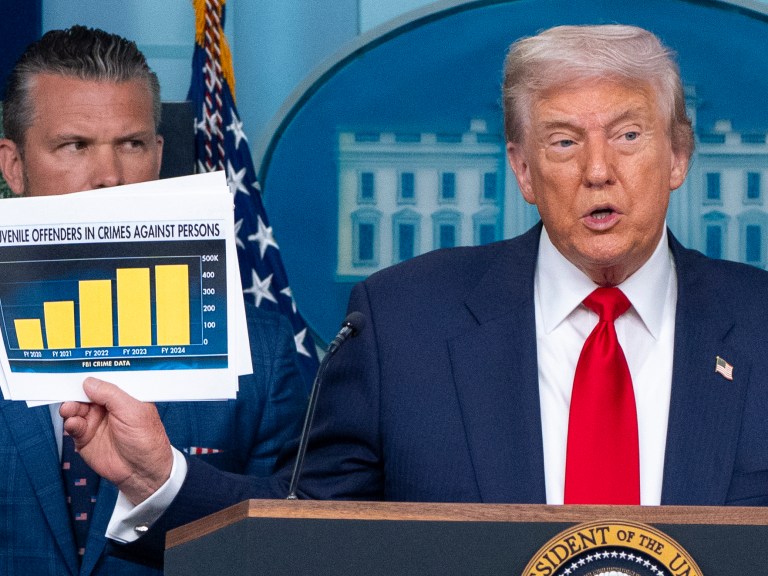
After months of threatening a federal takeover, President Trump today declared a public safety emergency in DC calling up the National Guard and placing a federal commissioner in charge of the Metropolitan Police Department. Saying it’s Liberation Day in DC, Trump vowed to rescue the nation’s capital from what he called crime, bloodshed, bedlam, squalor and worse. What does this mean for residents of Washington, DC at a time when police data shows a drop in violent crime… and that city curfews are working? Is this crime-fighting or a power grab?
President Donald Trump has taken the rare step of placing Washington, D.C.’s police department under federal control, deploying 800 National Guard troops to the city. He claims the move is necessary to address “out-of-control” crime, but city data tells a different story; violent crime in the nation’s capital is at a 30-year low.
The federal takeover, which can only last 30 days without Congressional approval, has sparked outrage among D.C. leaders.
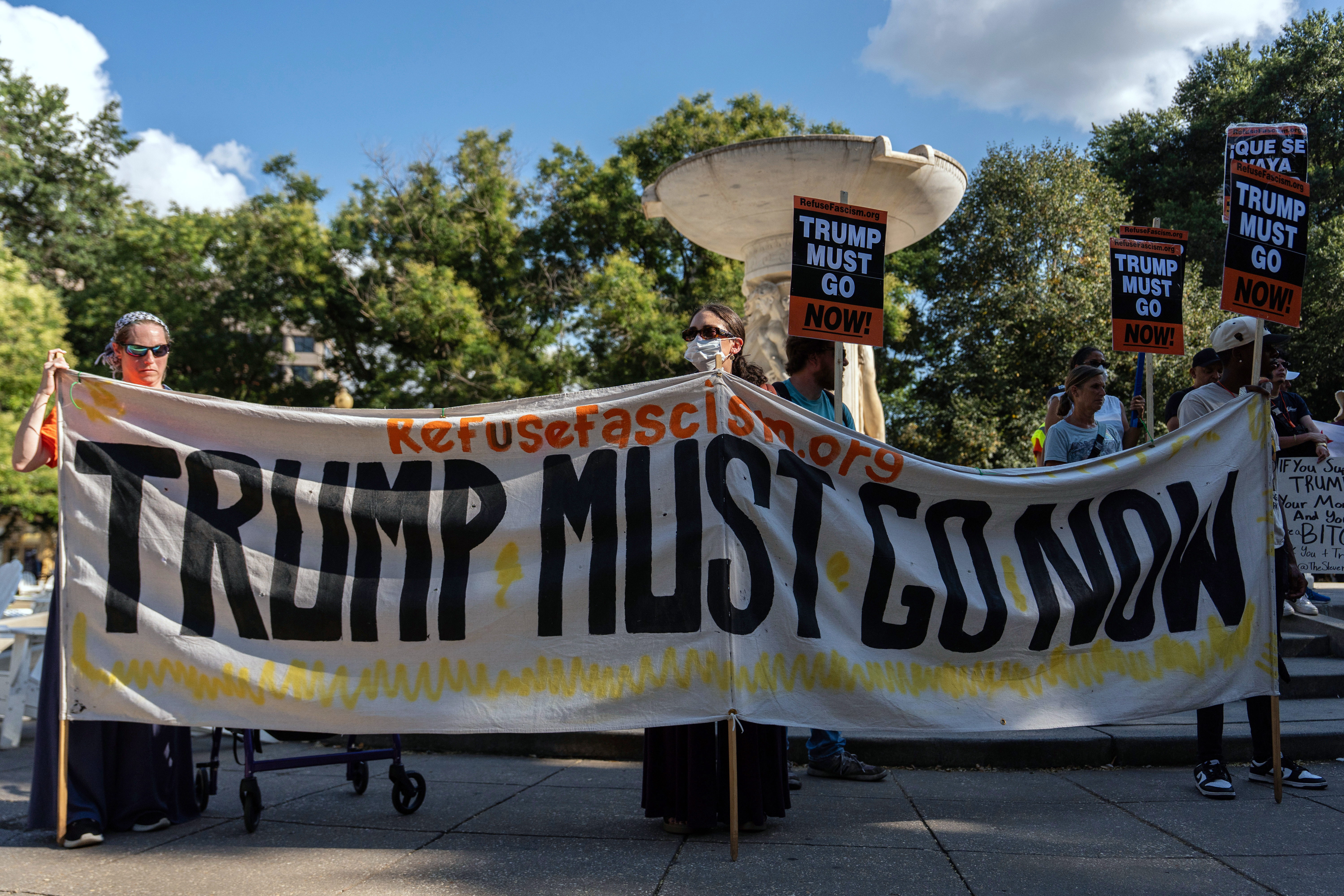
They argue the decision undermines the city’s home rule and ignores progress made in public safety. “This is unnecessary and an overreach,” one official said, pointing to recent statistics showing crime is trending downward.

Local leaders are calling the move a political stunt that distracts from the truth: Washington, D.C. is safer now than it has been in decades.“While this action today is unsettling and unprecedented, I can’t say that, given some of the rhetoric of the past, that we’re totally surprised,” Mayor Muriel Bowser said in response.
Understanding Why This Matters Beyond Crime Statistics
Washington, D.C. isn’t a state, it has “home rule,” which lets residents elect local leaders, but Congress and the President can override those decisions. This means federal control over the city’s police department, while rare, is legal, but it’s also deeply controversial.
In the past, federal troops were deployed after the 1968 riots following Dr. Martin Luther King Jr.’s assassination, a move that left lasting scars in the community. During the 1980s drug crisis, increased federal law enforcement sparked debates over over-policing and strained local relationships. Even post-9/11 security expansions changed the city’s atmosphere significantly.
D.C. residents push back against these interventions because they feel like a loss of control over their own neighborhoods. When national headlines frame the city as being in crisis, even when violent crime is falling, it damages trust in both local and federal government. These federal actions also fuel the ongoing push for D.C. statehood, as residents seek full representation and authority over their city.
Local officials maintain that this move is more political than practical. “We are not experiencing a crime spike… It is true we had a terrible spike in crime in 2023, but this is not 2023, this is 2025,” Bowser emphasized.
The debate over federal control highlights a larger issue: it’s about power, governance, and respect for the will of the city’s residents, not just crime numbers.