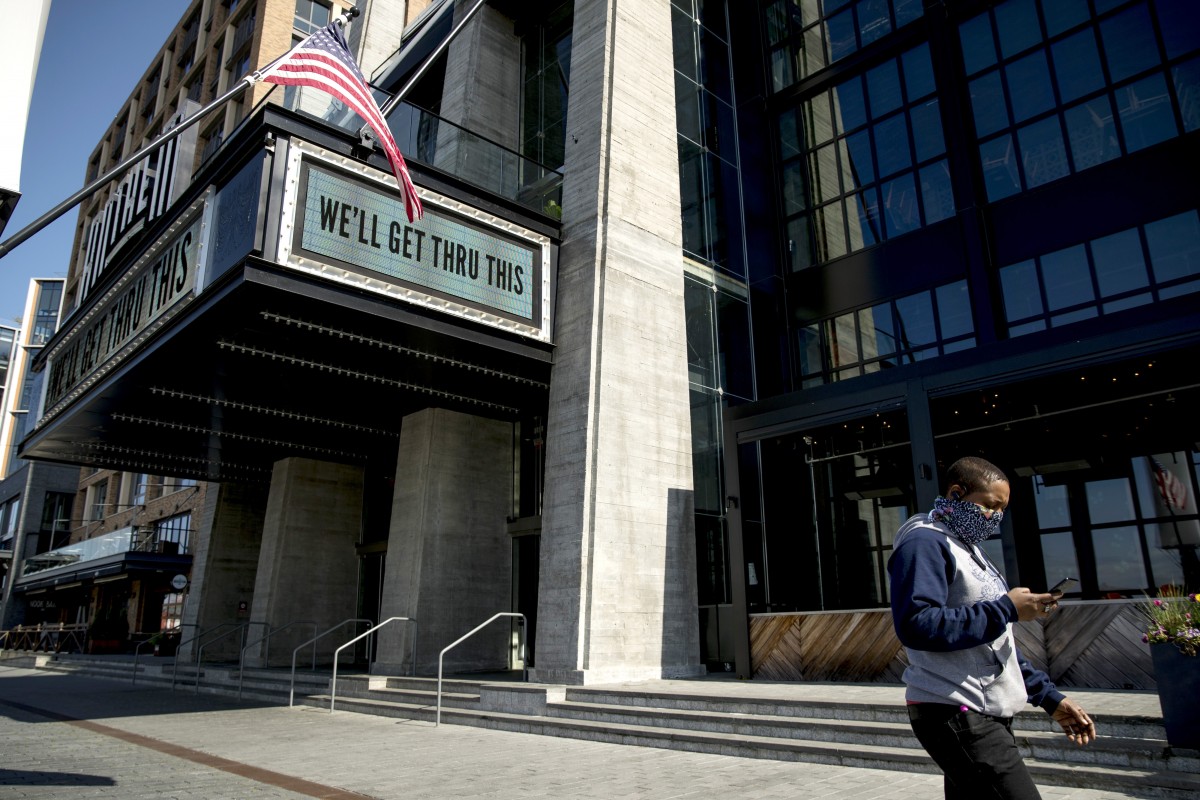
DC to Begin Phase One Reopening on Friday, May 29th
City-operated parks and recreation centers will open for passive recreation activities but contact sports such as football, soccer or basketball will not be allowed.

We take a look at how this disease is impacting out children.


Dispute over dog in Central Park sparks racism accusations.
The state’s most populated region did not open like the rest of the state because of high COVID-19 infection and death rates.


The songs that both groups have created over the years need to be heard in their essences and that’s clear and crisp. 112 and JE dominated an era when R&B male groups held a boot on the neck of the industry. So let’s all reminisce the right way and pay our respects to both legendary groups. Enjoy!
https://music.apple.com/us/playlist/jagged-edge-vs-112/pl.u-AkAmVxGsVmyAL3
Grilling tips for the holiday weekend.
Resources:


Large Study Concludes Hydroxychloroquine Treatments Linked To Risk Of Death, Heart Arrhythmia

Get quarantine hair care tips and get the scoop on some of the most outrageous Strawberry letters.
Ms. Strawberry is a sweet, gracious person. She’s also a Boss! A Gracie Award winner, NAACP Image Award winner, syndicated radio personality and author. Be sure to purchase her book, The Strawberry Letter: Real Talk, Real Advice, Because Bitter Isn’t Sexy! Find Shirley Strawberry on IG @mygirlshirley
Our second guest was Synergi Salon owner, Karen Hill! She wowed everyone with her gorgeous mane and gave us great tips on hair care at home. She offers a line of hair care products that everyone in the comment section already knew about. I can’t wait to get mine. As you’ll see in this interview, Karen wants us all to fall in love with our own hair. No matter what the texture is, it’s yours and you should treat it with TLC. I’m all in, Karen! Connect with Karen Hill on IG @synergisalon
View this post on Instagram
County Executive Angela Alsbrooks says the county is on a downward trend of COVID-19 infections.
Recent data shows the County on a downward trend in positivity, hospitalizations, and death rates. Prince George’s leads the region and state in the number of COVID-19 cases with 12,830 persons infected as of Thursday night. 444 persons in Prince George’s County have died from complications of the virus. COVID-19 is the leading cause of death in the county with 9 persons dying daily.
“After reviewing recent data, we are cautiously moving toward a modified phase one reopening by June 1,” said Alsobrooks. “While the data has improved, we are not out of the woods yet. I urge all Prince Georgians to exercise caution, use good judgement and observe the Stay-at-Home Order this holiday weekend so that we can stay on track to begin reopening by our target date.”
According to County data, the week of May 3 through May 9 was the highest number of COVID-19 hospitalizations with an average of 244 inpatients in County hospitals per day. The County began to see a decrease starting on May 10, with last week’s average being 208 patients. For this week, to date, County hospitals are averaging 184 patients, a 25% decrease from the peak. COVID-19 is the leading cause of death in the county with an average of 9 persons dying daily.
In addition, preliminary data of tests collected last week have a 28% positivity rate, which is a decrease from a high of 41% the week of April 19. And finally, deaths have slowly decreased from a high of 72 during the week of April 19, to 66 the week of May 3. Preliminary data from the week of May 10 shows 59 deaths. While this is an improvement, COVID-19 continues to be the leading cause of death in the County since April, surpassing heart disease and cancer.
The County Executive will provide details on the modified reopening in the coming days.
“I hope to God that you are all blessed to have someone in your life that loves you and believes in you like this man believed in me,” Diddy wrote on Instagram. “I’m going to miss him so much. I can’t even imagine life without Dre.”
NEW YORK (AP) — A tribute to Andre Harrell, the influential music executive who discovered Sean “Diddy” Combs and died earlier this month, will air Sunday.
The memorial broadcast dubbed “Mr. Champagne and Bubbles” — a nickname of Harrell’s — will feature tributes from Chris Rock, Mariah Carey, Jamie Foxx, Babyface, Naomi Campbell, Lee Daniels, Clarence Avant, Russell Simmons, Kimora Lee Simmons, Robin Thicke and more. It will air commercial free on BET, BET Jams, BET Soul and REVOLT TV, where Harrell served as vice chairman.
Harrell, who died at age 59, founded Uptown Records and shaped the sound of hip-hop and R&B in the late 1980s and ’90s with acts such as Mary J. Blige, Heavy D & the Boyz, Al B. Sure! and Guy, the R&B trio that also included megaproducer Teddy Riley, the leader of the New Jack Swing movement.
In the early ’90s, Diddy began interning for Uptown and quickly rose up the ranks after finding success with just-signed acts including R&B group Jodeci and Blige, who was dubbed the Queen of Hip-Hop Soul with the release of her 1992 debut, “What’s the 411?” Uptown also released Notorious B.I.G.’s first single, 1993’s “Party and Bull—-,” which was featured on a film soundtrack.
Diddy often credits Harrell with giving him the tools to find success in music and life, even saying Harrell was like a father figure to him. In 1993, Harrell let go of Diddy, who then launched his uber-successful Bad Boy Records.
Diddy posted multiple tributes to Harrell on social media following his death.
“I hope to God that you are all blessed to have someone in your life that loves you and believes in you like this man believed in me,” Diddy wrote on Instagram. “I’m going to miss him so much. I can’t even imagine life without Dre.”
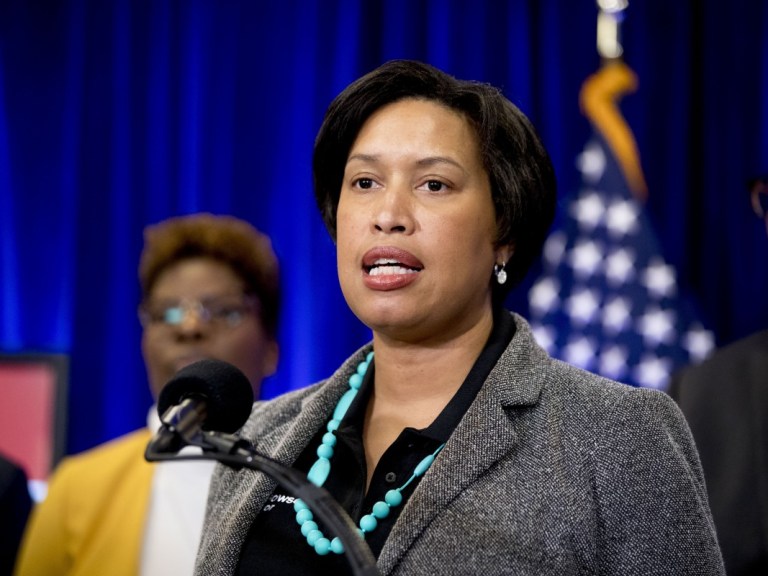
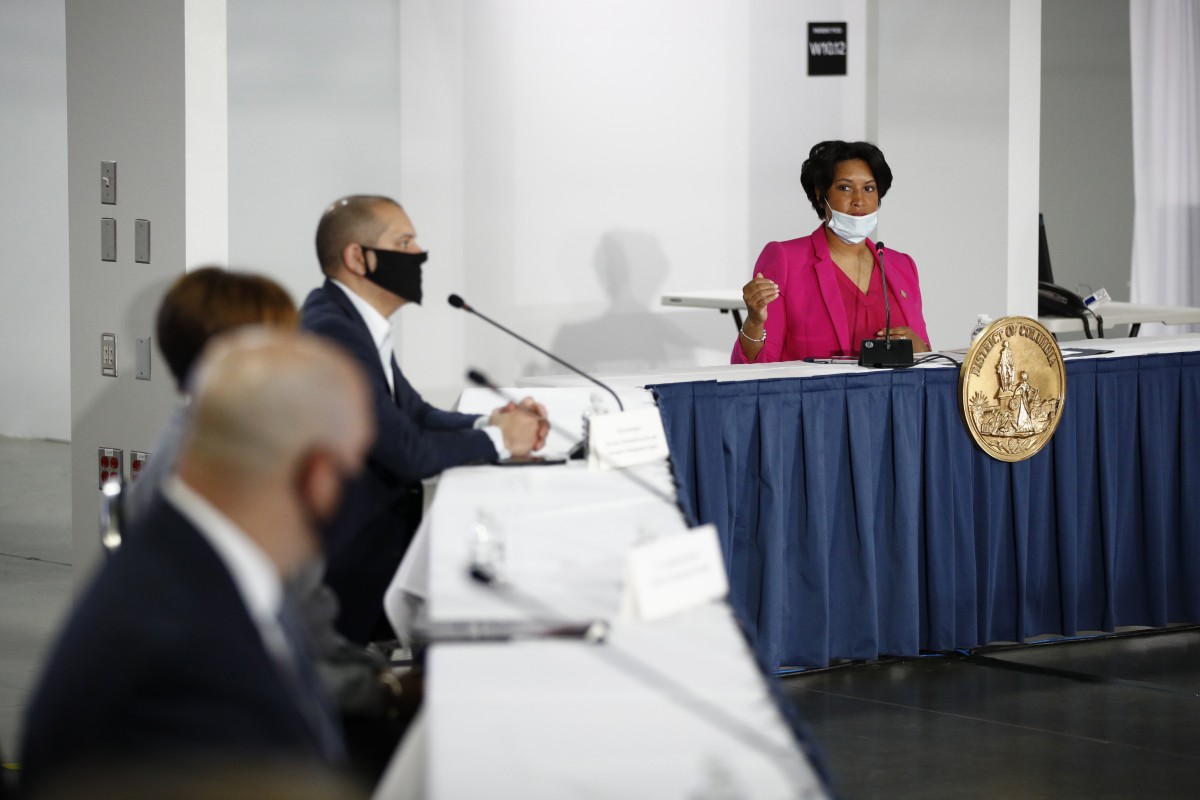
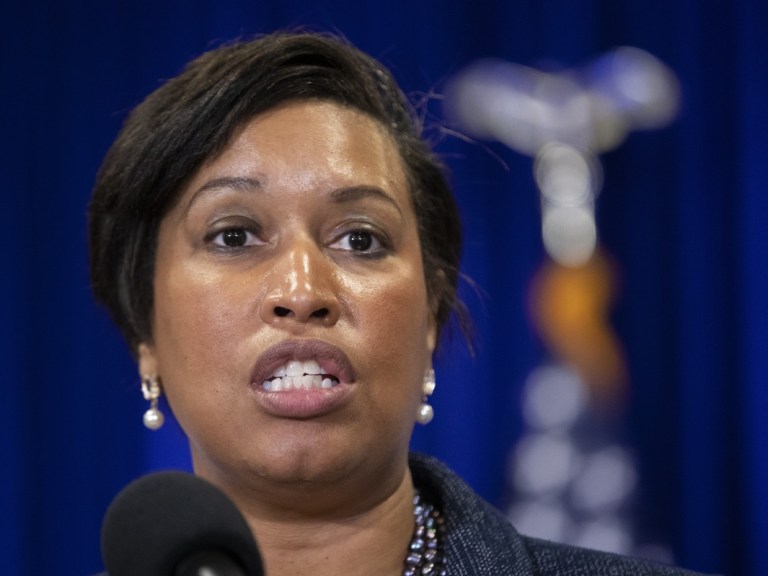
The announcement came during a news conference that released some of the findings of the Reopen DC Advisory Group.

Is America for a mental health crisis caused by the COVID-19 pandemic?


The Legal Lunch Break, Zoom Meeting is tomorrow at 12noon

One In Four Restaurants May Permanently Closure Due To Pandemic

She announced Wednesday that her Oprah Winfrey Charitable Foundation will donate money to organizations dedicated to helping underserved communities in Chicago; Baltimore; Nashville, Tennessee; Milwaukee; and Kosciusko, Mississippi, where she was born.
NEW YORK (AP) — Oprah Winfrey is giving grants to the cities she’s called home through her $12 million coronavirus relief fund.
She announced Wednesday that her Oprah Winfrey Charitable Foundation will donate money to organizations dedicated to helping underserved communities in Chicago; Baltimore; Nashville, Tennessee; Milwaukee; and Kosciusko, Mississippi, where she was born.
“The reason I’m talking about it is because there is going to be a need for people of means to step up,” Winfrey said in an interview with The Associated Press. “I mean, this thing is not going away. Even when the virus is gone, the devastation left by people not being able to work for months who were holding on paycheck to paycheck, who have used up their savings — people are going to be in need. So my thing is, look in your own neighborhood, in your own backyard to see how you can serve and where your service is most essential. That is the real essential work, I think, for people of means.”
After speaking with Chicago Mayor Lori Lightfoot and other leaders, Winfrey decided to give $5 million to Live Healthy Chicago, which provides immediate support to seniors and high-risk residents affected by the coronavirus.
In Nashville, where Winfrey lived with her father and started her media career, she is giving $2 million to NashvilleNurtures, a collaboration with Mount Zion Baptist Church and Tennessee State University, Winfrey’s alma mater. They plan to feed 10,000 families in and around the city.
In Milwaukee, where she lived with her mother, Winfrey is assisting those in need of housing and mental health care with a $100,000 donation to SaintA and The Nia Imani Family, Inc.
In Baltimore, where Winfrey also built her media career, she’s donating money to Living Classrooms Foundation and Center for Urban Families.
She will also give $115,000 to the Boys and Girls Club of East Mississippi.
“I’m not opposed to big organizations dispersing money, but I always like to do the on-the-ground grassroots stuff myself,” she said. “Look, I want to be able to reach people who have been incarcerated and are coming out of prison. I want to reach mothers of domestic violence. I want to reach people. I want to feed people. I want to help people get access to testing.”
Winfrey said she’s been homebound since March 11, four days after she wrapped her nine-city wellness tour that visited arenas like Barclays Center in Brooklyn and the Forum in Inglewood, California.
She announced her COVID-19 Relief Fund last month, initially giving $1 million to America’s Food Fund. She said Wednesday that she will also give grants to advocacy organization Global Citizen, New Mount Pilgrim Missionary Baptist Church in Chicago and Minnie’s Food Pantry in Plano, Texas, among other organizations.
Before giving out millions to others, Winfrey said she first helped the people closest to her.
“The first thing I did was start in my own family, people I knew who were going to be touched and were not going to have jobs. Then I moved out to people who I’ve worked with and known who maybe would be out of work. I started literally here, working my way out, and then into the community. So people who I hadn’t spoken to in years ended up getting checks from me like, ‘What is this?’” she said.
“All the cousins and some aunties — try to help your own family first,” she added. “I didn’t want an announcement about, ‘I’m going out into the world trying to help other people’ and then your own family saying, ‘Hey, I can’t pay my light bill. I can’t pay my rent.’”
Last week, Winfrey gave a commencement speech during Facebook’s virtual “Graduation 2020” event, and asked the graduates, “What will your essential service be?” She said she’s asked herself the same question.
“What this pandemic has done is made me think about giving differently. How I give and who’s on the receiving end of that, and how do you do that in such a way that sustains people? I’ve ultimately always believed that you teach people to fish … but sometimes people just need fish and a piece of bread,” she said. “Sometimes you need some fish, OK? Sometimes you don’t have time to learn to fish. I just need some fish today!”
Susan Taylor discusses black women wellness and mentoring of black children.
During this installment of HUR@Home, I sat down with Susan Taylor, Editor Emeritus of Essence Magazine, author, activist and thought-leader for black women.
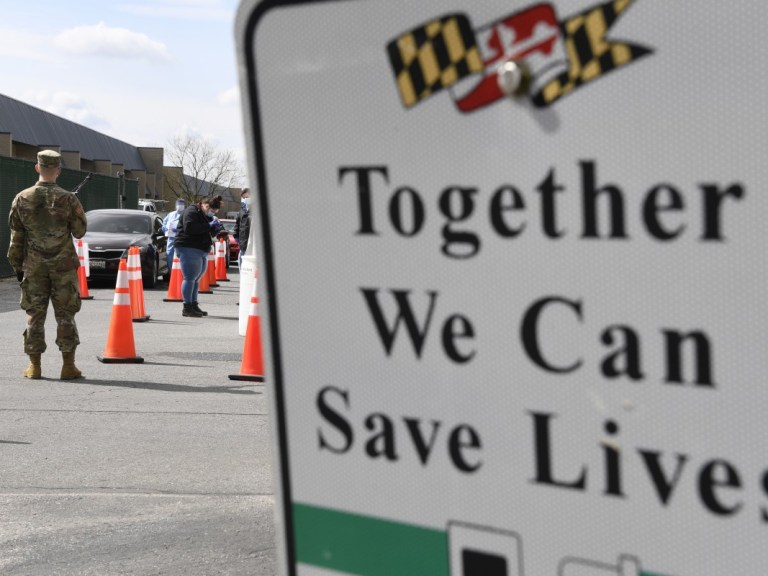
Free COVID-19 testing open to all in Maryland without an appointment
Officials are hoping these new guidelines will allow the state to have a truer picture of the pandemic. The move comes as Maryland’s number of infections has topped 41,000 with 1,963 deaths. Montgomery and Prince George’s Counties continue to be hard hit by the crisis. The new testing sites will be at emissions inspection sites in Hyattsville, Clinton, and Glen Burnie and at the Timonium Fairgrounds in Baltimore County.
Prince George’s County has the highest number of coronavirus cases in the state and county leaders have been critical of Governor Hogan, saying he has not done enough to place resources in the county. Prince George’s has 12,240 cases as of Wednesday morning with 424 deaths. Montgomery County has 8,950 infections and 465 COVID-19 related fatalities.
We discuss rent and mortgage payments during the COVID-19 shutdown.
Kayla Williams, Esq., Staff Attorney, Community Legal Services of Prince George’s County (not pictured)

DC Mayor Muriel Bowser received a letter from Charles Allen, Mary Cheh and Brianne Nadeau making the request.

The Bulls defeated the Utah Jazz 87–86 as Michael Jordan hit the game-winning basket with 5.2 seconds remaining to cap their sixth championship in eight seasons.
The final episodes of “The Last Dance” have aired, yet ESPN has one more program to show about the Chicago Bulls’ sixth championship.
ESPN will show “Game 6: The Movie” on Wednesday night at 9 p.m. EDT, following a rebroadcast of episodes nine and 10 of “The Last Dance.” The episode will feature game footage captured by five NBA Entertainment cameras and marks the first time that the game has been available to watch in high-definition.
The Bulls defeated the Utah Jazz 87–86 as Michael Jordan hit the game-winning basket with 5.2 seconds remaining to cap their sixth championship in eight seasons.
Executive Producer Gregg Winik — who had the same title for NBA Entertainment during that Bulls championship season — said the brainstorming about Game 6 started by compiling the last 40 seconds of the game for the final episode of “The Last Dance”. After they were able to do that, it started to expand into a project of its own. Winik and his team then took the NBC telecast and started to lay in footage to get the complete product.
“If you would have told me six months ago if we could have done this, I would have said it was impossible,” Winik said. “It features a lot of dramatic imagery and the pictures jump off the screen.”
High definition was still in its infancy in 1998. In fact, the first major sports event to be broadcast in high definition didn’t happen until Super Bowl 34 in January 2000.
Connor Schell, ESPN’s executive vice president for content, said there were conversations about showing the original NBC broadcast, until discussions revolved around an enhanced presentation.
“It was timed out beautifully and how quick we were able to get it on the air,” Schell said. “To top off this project with this never-seen-before version of Game 6 is an incredible ending.”
The film will feature the original NBC commentary by Bob Costas, Isiah Thomas, Doug Collins, Ahmad Rashad and Jim Gray.
ESPN and Nielsen said that the final two episodes of ’The Last Dance” on Sunday averaged 5.6 million viewers.
Williams has has been experiencing fatigue because of symptoms from Graves’ disease, a spokesperson for “The Wendy Williams Show” said Monday.
LOS ANGELES (AP) — Wendy Williams is taking a break from her daytime talk show to receive treatment for a previously announced health condition.
Williams has has been experiencing fatigue because of symptoms from Graves’ disease, a spokesperson for “The Wendy Williams Show” said Monday.
As a precautionary measure, the spokesperson said, Williams is taking time off from the show that she’s been taping remotely from her home in New York City during the pandemic.
“We look forward to welcoming Wendy back soon and continuing the Wendy@Home shows,” according to a statement from the show. No return date has been announced.
Reruns of Williams’ show will air during her absence.
In 2018, Williams announced that she had Graves’ disease, which leads to the overproduction of thyroid hormones and can cause wide-ranging symptoms and affect overall health.
Her show stopped production for several weeks at that time, and it was on hiatus again early last year as Williams dealt with the disorder and a shoulder injury.
In October 2017, Williams fainted on stage during her show, saying later she became overheated while wearing a bulky Halloween costume.
We hear details from a survivor of the coronavirus.


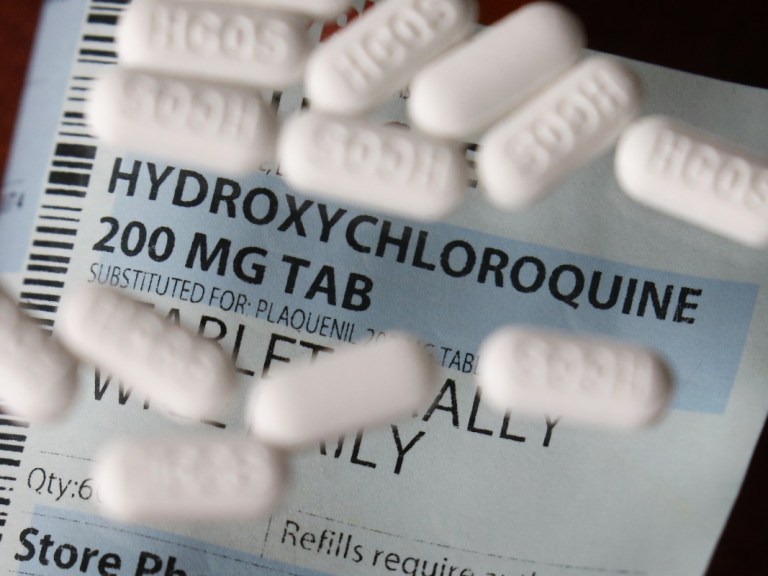
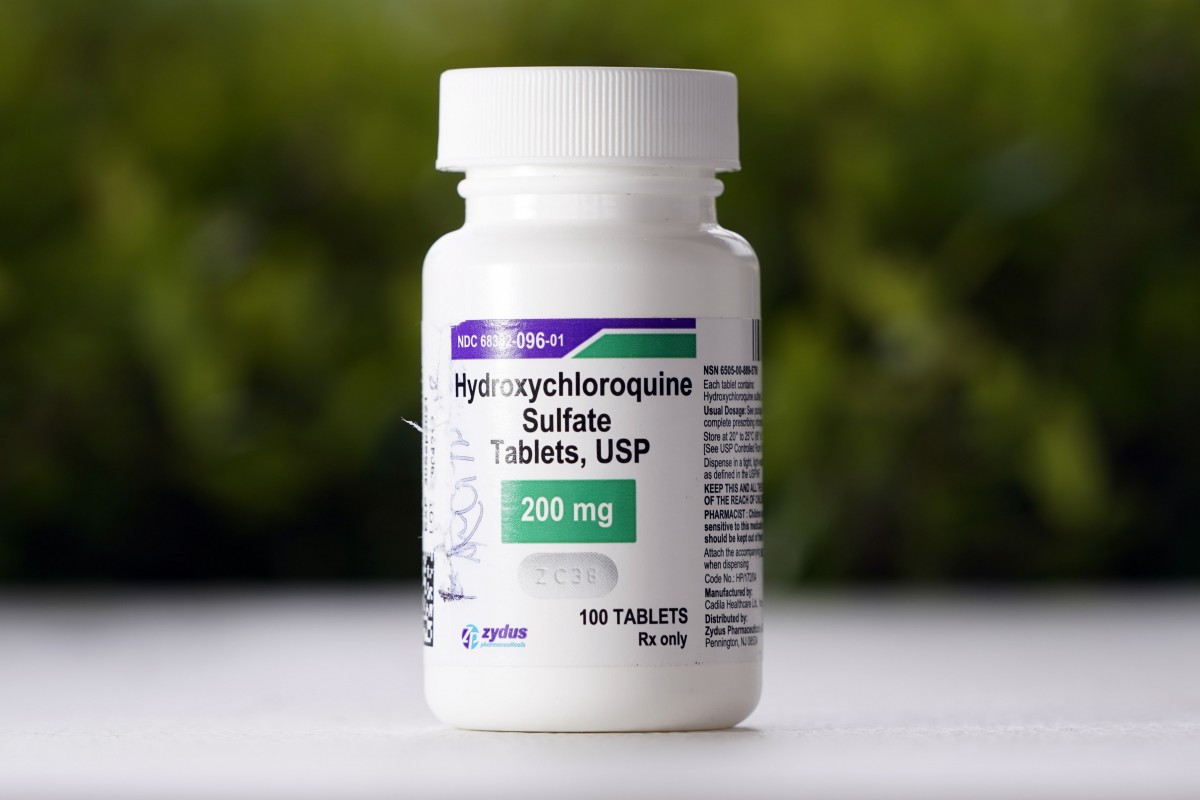
FDA says hydroxychloroquine should not be taken outside of a hospital setting. But Trump is taking it anyway.
Trump has been tested several times for COVID-19 and has tested negative. Hydroxchloroquine, an anti-malaria drug, has been pushed for weeks by Trump against the cautionary advice of many of his own administration’s top medical professionals. Experts have said the drug has the potential to cause significant side effects in some patients and has not been shown to combat the new coronavirus.
Trump said his doctor did not recommend the drug. But he started taking it. Because I thinks it’s good. I’ve heard a lot of good stories. If it’s not good, I’ll tell you right. I’m not gonna get hurt by it,” Trump said.
The Food and Drug Administration just last month issued a warning to health officials that the drug should not be used to treat COVID-19 outside of hospital or research settings, due to sometimes fatal side effects.
For the first time ever, 11 Fairfax County-based companies in a broad range of industries hold spots on the Fortune 500 list of the largest publicly traded companies in the United States. Fortune magazine published the 2020 list today.
FAIRFAX COUNTY, Va.–(BUSINESS WIRE)–May 18, 2020–
For the first time ever, 11 Fairfax County-based companies in a broad range of industries hold spots on the Fortune 500 list of the largest publicly traded companies in the United States. Fortune magazine published the 2020 list today.
Fairfax County has more Fortune 500 headquarters than 35 states and the District of Columbia, and is home to nearly two-thirds of the 17 companies based in the Washington, D.C., region. The others are in Arlington County, Va. (1), Washington, D.C. (2) and Montgomery County, Md. (3).
Fortune based its rankings on 2019 revenue. The new list includes these Fairfax County-based companies:
41. Freddie Mac, Tysons, financial services
83. General Dynamics, Reston, aerospace and defense
96. Northrop Grumman, Falls Church area, aerospace and defense
97. Capital One Financial, Tysons, financial services
155. DXC Technology, Tysons, information technology
289. Leidos Holdings, Reston, information technology
338. Hilton Worldwide Holdings, Tysons, hospitality
417. NVR, Reston, home construction
434. Beacon Roofing, Herndon, building materials
450. Booz Allen Hamilton, Tysons, management consulting
466. SAIC, Reston, information technology
Fairfax County had 10 companies on the 2019 list. It added its 11th headquarters thanks to SAIC, which entered the list at No. 466.
“Only a handful of communities can say they are home to 11 Fortune 500 companies. It sends a really strong message from the corporate world that this is a strong, stable, resilient location for headquarters operations,” said Victor Hoskins, president and CEO of the Fairfax County Economic Development Authority.
“The wide diversity of the industry sectors represented here also is striking, everything from our traditional strengths in IT, aerospace and defense to financial services, hospitality and construction, and that also speaks well for the stability and resiliency of our business base,” Hoskins said.
Other interesting information from the 2020 Fortune 500:
The Fairfax County Economic Development Authority promotes Fairfax County as a business and technology center. In addition to its headquarters in Tysons, Fairfax County’s largest business district, the FCEDA maintains business investment offices in six important global business centers: Bangalore/Mumbai, Berlin, London, Los Angeles, Seoul and Tel Aviv. Follow the FCEDA on Facebook, Instagram, LinkedIn, Twitter and YouTube.
The FCEDA is a member of the Northern Virginia Economic Development Alliance, which promotes and markets Northern Virginia outside the region and conducts activities and events to build the regional business community. Other members of NOVA EDA: Alexandria Economic Development Partnership, Arlington County, City of Fairfax, City of Falls Church, Fauquier County, Loudoun County, City of Manassas, City of Manassas Park and the Prince William County Department of Economic Development.
HOPE Project is offering training for careers in the IT field . Information webinar is tomorrow evening at 6pm.
Register for COVID 19 – Transitioning to a Career in IT Sponsored By HOPE Project on May 19, 2020 6:00 PM EDT at:
https://attendee.gotowebinar.com/register/7416794574938149133
After registering, you will receive a confirmation email containing information about joining the webinar.

Michelle Obama has been reading midday Monday for the past several weeks in support of families with small children at home during the coronavirus pandemic.
The former first lady first read “The Giraffe Problem,” by Jory John and Lane Smith. Then she was joined by Barack Obama, seen over the weekend addressing the country’s high school graduating class, as they took turns — the former president even barked at one point — on Julia Sarcone-Roach’s “A Bear Ate Your Sandwich.”
Michelle Obama has been reading midday Monday for the past several weeks in support of families with small children at home during the coronavirus pandemic. Books she has featured include Julia Donaldson’s ”The Gruffalo” and Eric Carle’s “The Hungry Caterpillar.”
Next Monday, she will bring on a pair of non-readers — the family’s dogs, Bo and Sunny — for the canine-appropriate “Can I Be Your Dog?”, by Troy Cummings.
The series can be viewed on the Facebook and YouTube pages of PBS Kids and on the Facebook page of the Obamas’ publisher, Penguin Random House.
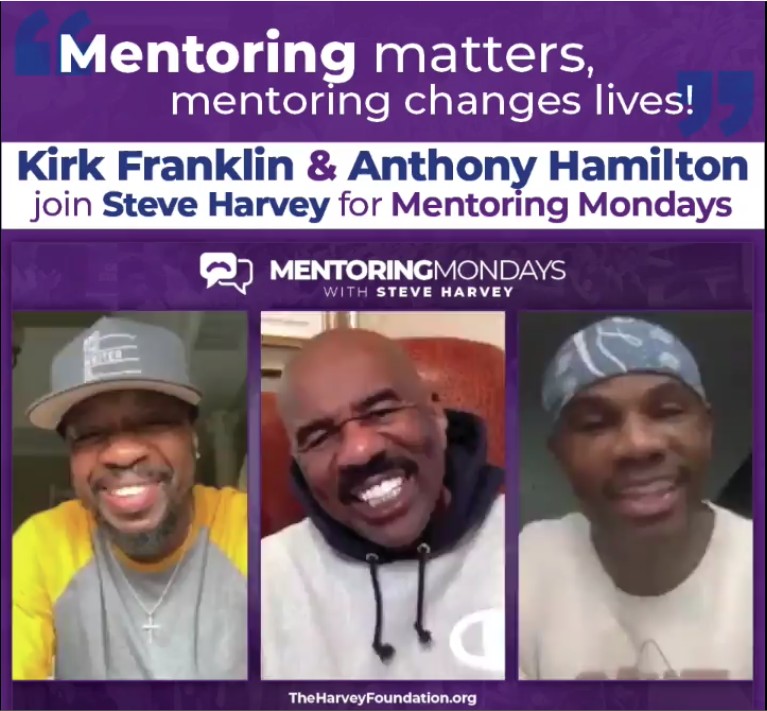
Mentoring Monday’s features special guests Kirk Franklin and Anthony Hamilton
Information at theharveyfoundation.org

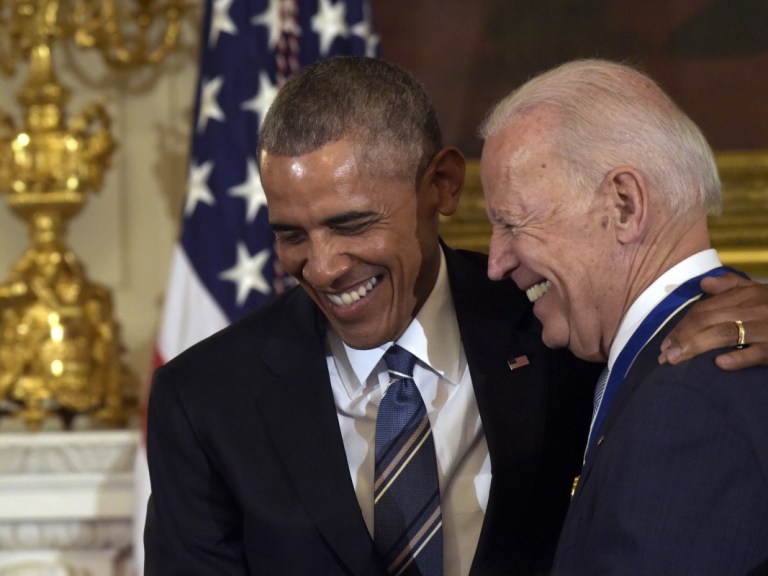
President Trump has loudly accused both Obama and Biden of being involved in a major crime, but he has offered no evidence to support the claim.

We were joined by the dynamic Dr. Jamal Harrison Bryant and Gospel singer Mike McClure, Jr. better known as Pastor Mike, Jr. Both Pastor’s urged us to pray for God’s Will in our lives.
On the May 17th edition of HUR@HOME Inspiration we were joined by the dynamic Dr. Jamal Harrison Bryant and Gospel singer Mike McClure, Jr. better known as Pastor Mike, Jr. Both Pastor’s urged us to pray for God’s Will in our lives.
Pastor Jamal Bryant is Senior Pastor of New Birth Missionary Baptist Church in Georgia. He is a powerful speaker and a social justice activist who earned his bachelor’s degree from Morehouse and Master of Divinity from Duke University. Before New Birth, he was the pastor of Empowerment Temple AME in Baltimore.
Dr. Bryant talked about New Birth’s efforts to serve its community by providing free COVID-19 testing to 2,000 people in one day in the church parking lot. Pastor Bryant and church members also provided groceries for 1,000 people last week. New Birth is helping smaller churches and Dr. Bryant stressed the importance of churches learning to grow technologically and strategically through the challenges presented by the pandemic. He launched a livestream series today titled, “Prospering through the pandemic.”
Dr. Bryant also let us know that he had every intention of joining hundreds of Georgians at a rally yesterday who demanded justice in the wake of the shooting of Ahmaud Arbery. However, the NAACP urged him to not come in person because of safety issues, but to protest online, which he did.
Mike McClure, Jr, better known as Pastor Mike, Jr. is Pastor of the Rock City Church in Birmingham, Alabama, and a five-time Stellar Award nominee. He talked about the origins of his hit song, “Big” which started as a sermon that got a million views online. He was urged by a record executive to record it as a song and it went big.
Pastor Mike talked about overcoming the challenges of releasing new music during the pandemic and gave a delightful account of marrying his childhood sweetheart. They have five children. Pastor Mike started his church with he was 25 years old and the church now draws 3,500 worshippers a week. Like Dr. Bryant, Pastor Mike is helping churches in his area that lack technological capacity make it through the pandemic.
Are you supporting the re-opening or closing of America during the COVID-19 pandemic?


Howard University Faculty Practice Plan is increasing coronavirus testing from two days to four in hard hit areas of the District of Columbia.
Residents can now get tested at the clinic , with an appointment, four days a week instead of two. “The Howard University Faculty Practice Plans testing site has been met with overwhelming response from the D.C. communities of Ward 7 and Ward 8,” said Dr. Frederick. “That lets us know that we are in the right place and the expansion to four days a week will allow us to see patients sooner so they can know their status faster.”
As a show of community support, journalist Armstrong Williams, founder and sole owner of Howard Stirk Holdings Broadcast, and Capital Medical Supply, Inc., donated 30,000 masks to be used at the clinic for staff and patient safety.
We’d like to thank Mayor Bowser for her guidance to get our city through this pandemic, and special thanks to Mr. Armstrong Williams and Capital Medical Supply for this generous mask donation which will go a long to ensure the protection of our patients and staff,” added President Frederick.
“Howard University is an essential partner in our effort to build a more equitable health care system, and we are grateful that this testing site is delivering critical care and resources to our most vulnerable communities,” said Mayor Bowser. “We also appreciate the continued generosity of those like Armstrong Williams, and contributions like these go a long way toward supporting our front line workers.”
The Howard University Faculty Practice Plan began offering free coronavirus testing at its Benning Road Clinic (4414 Benning Road NE) on May 5 thanks to a $1 million grant from Bank of America. The grant will be used to improve access to COVID-19 testing in the diverse Washington, D.C. communities located east of the river. Beginning next week, testing will be available Tuesdays through Fridays, from 9 a.m. to 12:30 p.m. and 2 p.m. to 4 p.m. D.C. Residents of Ward 7 and 8 may make an appointment by calling 202-865-2119, option 3. The team of physicians will see patients who are showing symptoms or who believe they are asymptomatic. Please bring your photo I.D. with you.
Hogan urges caution as the “safer-at-home-order” kicks in.

“To Succeed In This Climate, We Must Become Flexatarians!”
Essence Magazine turns 50 years old this year and Editor-At-Large, Mikki Taylor, has led the charge for over 30 of those years.
Ms. Taylor dropped all kinds of gems for us last night. No matter what it is you do for a living, or what your current life situation is, Mikki tells us how to elevate our lives and make it all make sense. You can find all kinds of inspiration in her book ‘Editor In Chic!’
She talks about the early days of being a Beauty and Cover Director at Essence. What that meant to her, as a black woman, to be able to share images and stories of Women of Color with the world. She was so right by saying it is a world conversation that Essence has with like minded people. Honestly, I can’t imagine being without my Essence Mag.
The conversation continues on this edition of HUR@Home ~ LIFESTYLES. Hope you enjoy it.
Please follow us on all platforms: @whurfm @angelastribling @iammikkitaylor

Dozens of NBA and WNBA players have come out of Prince George’s County over the past 20 years.


“It’s a troubling time for them,” Common said, “because they are the people who usually are overlooked.”
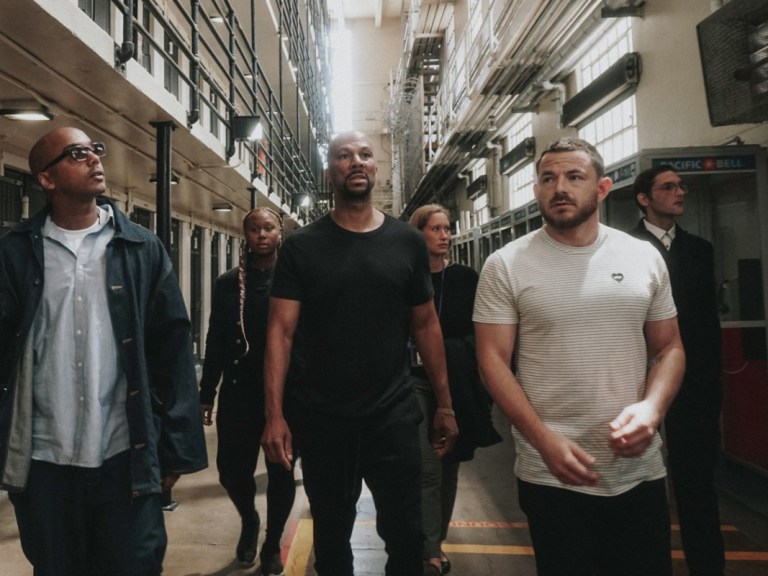
NEW YORK (AP) — Rapper and activist Common went into quarantine concerned about incarcerated people he has met during visits to jails, prisons and juvenile detention centers around the U.S. and who aren’t able to maintain social distance or adopt rigorous hygiene routines to prevent the spread of COVID-19.
“It’s a troubling time for them,” Common said, “because they are the people who usually are overlooked.”
On Wednesday, his criminal justice reform organization Imagine Justice launched a campaign with dozens of advocacy and activist groups calling attention to the threat that the coronavirus pandemic poses on millions of men, women and youths who are incarcerated in the U.S.
The campaign, dubbed #WeMatterToo, is urging authorities to immediately release people who have served the vast majority of their sentences, especially if they have existing health conditions that put them at greater risk of severe illness or death from COVID-19. Although state and local correctional institutions have already released thousands of people from confinement due to the pandemic, supporters of the campaign also want governments to pay for testing and housing for inmates after they are released.
Common said he also hopes to create greater public awareness about what happens inside the nation’s jails and prisons and the impact that has on society.
“We all have unanswered questions about the pandemic,” the Grammy and Academy Award winning rapper said. “But being in prison adds new levels to that questioning, because of the way that people have been treated in prison.”
A two-minute video for the campaign features the voices of inmates who say jail officials are not providing protective equipment or requiring social distancing and have not regularly sanitized shower facilities. The video, shared with The Associated Press ahead of the campaign’s launch, does not identify the inmates or where they are imprisoned.
COVID-19 outbreaks in jails and prisons around the country have caused alarm among advocates, who say inadequate mitigation protocol threatens both the lives of incarcerated people and correctional officers. Last month, the U.S. Bureau of Prisons released data that showed more than 70% of people in federal custody tested for COVID-19 were positive.
Similarly dire outbreaks have been reported in a handful of state-run correctional systems.
In Common’s hometown of Chicago, where the Cook County Jail is one of the nation’s largest jails, a federal judge last month ordered officials to ensure social distancing among the 4,000 people in custody. As of Tuesday, 161 inmates and 81 correctional officers were positive for COVID-19, according to the sheriff’s department. Many more inmates have tested positive but recovered. Seven inmates who have tested positive have died.
Guaranteeing prisoners’ safety during the pandemic is an issue of humanity, not politics, said Sam Lewis, executive director of the California-based Anti-Recidivism Coalition, one of nearly 65 partner organizations in the #WeMatterToo campaign.
“People have made mistakes that put them in jail,” said Lewis, a former life prisoner. “But that does not mean they should just die in those places. Accountability is not a death sentence.”
Before the pandemic, Common’s Imagine Justice group organized regular in-person visits to correctional facilities. Since the pandemic, visitation has been cut off or is severely limited at many facilities.
“Some of the strongest people I’ve ever met are in prison,” Common said. “I believe we can come out of this greater than we were before.”
The attorneys general for Maryland and Washington, DC filed the lawsuit in 2017 claiming the President was benefiting personally from his office.

Wells was a journalist and publisher in the late 1800s and early 1900s and later helped found civil rights and women’s suffrage groups. Ida B. Wells-Barnett died in 1931.
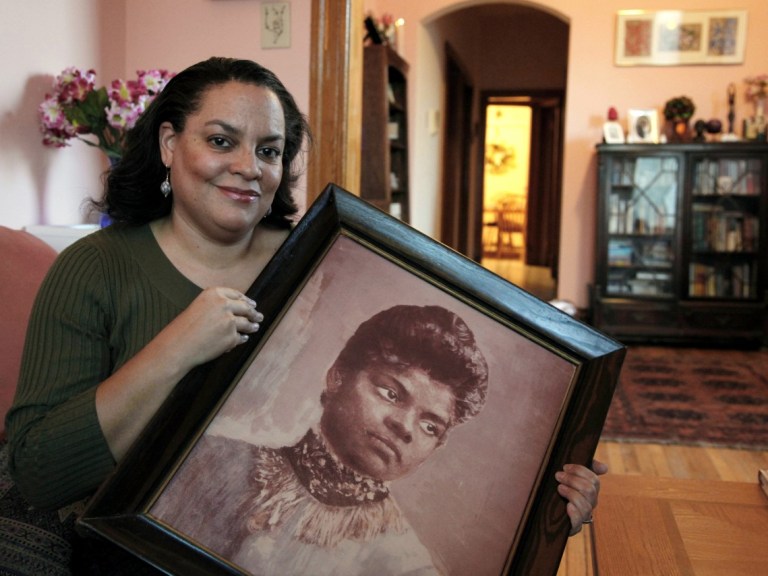
NEW YORK (AP) — The great-granddaughter of Ida B. Wells is writing a biography of the pioneering African-American journalist and activist.
One Signal Publishers announced Thursday that Michelle Duster’s “Ida B. the Queen” will come out next February. Duster will collaborate on the book with Atlantic staff writer Hannah Giorgis.
Duster is an author and educator who has spoken often about the legacy of Wells and previously worked on the books “Ida from Abroad” and “Ida In Her Own Words.” Earlier this month, Wells was honored with a posthumous Pulitzer Prize, noting “her outstanding and courageous reporting” on lynchings.
Wells was a journalist and publisher in the late 1800s and early 1900s and later helped found civil rights and women’s suffrage groups. Ida B. Wells-Barnett died in 1931.
“After working on various projects for over 30 years, it is exciting to finally see my great-grandmother’s sacrifice and legacy be fully recognized,” Duster said in a statement. “Ida’s life is well-known in some communities, but ‘Ida B. the Queen’ will introduce her to a wider and different audience. I hope her story will inspire people to live their own truths as Ida did.”
One Signal is an imprint of Simon & Schuster.
The DC Board of Elections is making voting safe and easy.
“The DC Board of Elections wants you to #VoteSafeDC. Request your mail-in ballot today so you can vote from home in the upcoming June 2 Primary Election. In person voting is available at 20 citywide Vote Centers from May 22 through June 2 (closed on May 25, Memorial Day), but voting by mail is recommended. You can download the mail-in ballot application at dcboe.org or call (202) 741-5283 to have one mailed to you.”
“For a policy to have this amount of impact in a short amount of years” is remarkable, because cancer often takes a long time to develop and prove fatal, she said.
Cancer deaths have dropped more in states that expanded Medicaid coverage under the Affordable Care Act than in states that did not, new research reveals.
The report Wednesday is the first evidence tying cancer survival to the health care change, which began in 2014 after the law known as “Obamacare” took full effect, said one study leader, Dr. Anna Lee of Memorial Sloan Kettering Cancer Center in New York.
“For a policy to have this amount of impact in a short amount of years” is remarkable, because cancer often takes a long time to develop and prove fatal, she said.
Lee discussed the results in an American Society of Clinical Oncology news conference as part of its annual meeting later this month.
The law let states expand Medicaid eligibility and offer subsidies to help people buy health insurance. Twenty-seven states and Washington, D.C., did that, and 20 million Americans gained coverage that way. The other 23 states did not expand benefits.
Researchers used national health statistics on cancer deaths to track trends before and after the law. They looked only at deaths in people under 65, who stood to benefit from the change because those older already were covered by Medicare. About 30% of U.S. cancer deaths are in people under 65.
The cancer death rate fell throughout the United States from 1999 to 2017 in that age group, but more in states that expanded Medicaid — 29% versus 25% in states that did not.
Researchers specifically compared death rates from 2011 to 2013, before the health care change, to 2015 to 2017, after it. In states that expanded coverage, the change meant 785 fewer cancer deaths in 2017. Another 589 deaths could have been prevented that year if all states had expanded Medicaid, researchers estimated.
Having health insurance allows quicker treatment after diagnosis and access to more treatment options so patients can get the best care available, which can improve survival odds, Lee said. Insured people also may have more opportunities for screening to detect cancers at a stage when they’re most treatable.
The new work builds on research from last year’s conference that suggested more patients, blacks in particular, were able to quickly start on treatment after a diagnosis of advanced cancer in states that expanded Medicaid, said Dr. Howard Burris. He is president of the oncology society and heads the Sarah Cannon Research Institute, a cancer center in Nashville, Tennessee.
“There was so much excitement” when federal statistics showed a big drop in cancer deaths over the last decade, and the new study shows “it was an even better improvement in expansion states,” said Burris, who had no role in the study.
The picture is murky for specific racial groups. States that expanded Medicaid generally had fewer blacks and more Hispanics than states that did not expand. Blacks have had worse cancer death rates than other groups, but that also has been improving at a greater rate than for whites. Expansion of Medicaid seemed to make no difference in cancer mortality rates for blacks, but did seem to improve the situation for Hispanics.
To date, 36 states and Washington, D.C., have expanded Medicaid and 14 have not.
The senators have previously estimated that airlines are holding back more than $10 billion by refusing to pay cash refunds.
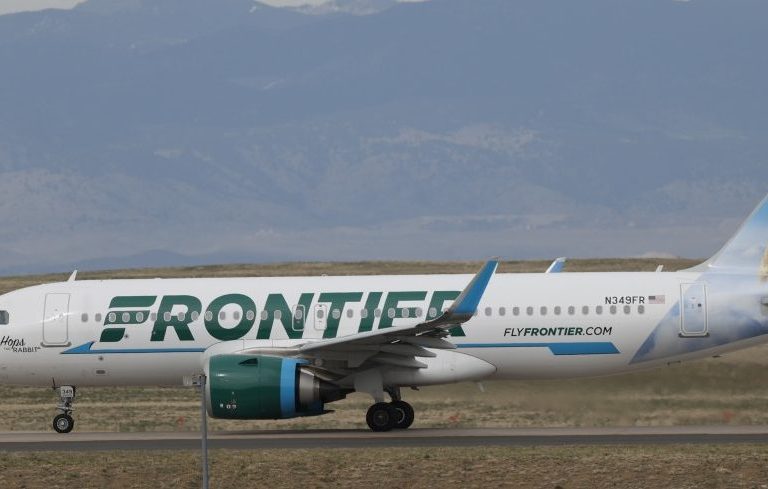
When her Las Vegas hotel shut down and returned her money, and both Nevada and her home state of Ohio issued stay-home orders, Helen Moon canceled the flight that she and her husband had booked on Frontier Airlines and asked for a cash refund.
No dice. Frontier offered only a travel credit instead of the refund because Moon – and not the airline — canceled the $970 reservation.
“We were following the government restrictions, they said shelter in place, and we had nowhere to sleep,” Moon says. “Why would you fly somewhere if you had no accommodations?”
There are thousands of other airline customers just like Moon who canceled bookings because of the coronavirus epidemic and can’t get their money back.
Some Senate Democrats are picking up the issue.
“At a time when families are struggling to pay for food, for housing, for prescriptions, it’s absolutely unconscionable that the airlines won’t return this money to consumers,” Sen. Edward Markey, D-Mass., said during an online news conference with consumer groups.
Markey and four other Senate Democrats proposed legislation on Wednesday that would require airlines to give full cash refunds to passengers during the pandemic, even if it was the customer who canceled. They say they will try to include the requirement in any further virus-relief measures.
The senators have previously estimated that airlines are holding back more than $10 billion by refusing to pay cash refunds.
Anna Laitin, director of financial policy for Consumer Reports, said in some cases airlines have pushed vouchers even when it was the airline that canceled the flight. Industry officials say that problem has been fixed.
The airlines are struggling to survive a 90% drop in air travel due to the pandemic. U.S. carriers are burning through at least $350 million a day, according to their trade group, Airlines for America.
The trade group says airlines are following U.S. Transportation Department regulations, which require cash refunds only when the airline cancels the flight.
“We are sticking to the regulations, as we have to, for a very simple reason: We want to preserve the jobs in our industry, we want to be part of the economic recovery,” the trade group’s president, Nicholas Calio, said at a Senate hearing last week.
If Congress forces the airlines to pay cash refunds, it will “drive the companies towards bankruptcy, which would happen very quickly at the rate things are going,” Calio said.
The Transportation Department said this week that it received more than 25,000 complaints about airlines in March and April, mostly about refunds. Normally the department gets about 1,500 complaints a month. The agency again reminded airlines of the rules around cash refunds, but it stopped short of requiring them when customers cancel a reservation.
Some consumers who initially took credits are having second thoughts.
Dan Baumbach, a retired computer programmer in Colorado, said he accepted United Airlines’ offer of a $400 voucher because he had bought the cheapest possible round trip this month from Denver to Reno, Nevada. But the voucher expires in November, a year from when he bought the ticket, and he is unsure whether air travel will be safe by then for a 71-year-old.
Now he wants cash, although he has not yet asked United for a refund.
“I don’t want to be greedy,” Baumbach said, “but I would like not to lose the money.”
How would you grade the government response and what needs to be done… if anything… to improve it?


Bowser has the authority to extend the stay-at-home order beyond June 8th or to shorten it between now and then.

Under phase-one, hard-hit areas like Prince George’s and Montgomery Counties will be able to delay reopening at their discretion.

“The purpose of the group is to just do something a little bit out of the ordinary,” said Ignash, the group’s leader and founding member.
FERNDALE, Mich. (AP) — Sarah Ignash spends her days looking after dogs in normal times. With her business temporarily shuttered because of the coronavirus, though, she’s taken to walks on the wild side through her Detroit suburb with dancing bears, bipedal zebras and the like.
Ignash, whose business in nearby Roseville specializes in boarding, grooming and day care for dogs, is one of the roughly two dozen members of the Ferndale T-Rex Walking Club who have been donning inflatable costumes for feel-good jaunts during these stressful times.
“It’s so much fun. Nobody can really see, (because) I have my mask on. And when I walk, I’m just smiling from ear to ear,” the 42-year-old Ignash said before donning her pink unicorn get-up and leading Monday’s impromptu parade.
It was the club’s seventh walk since it formed in March. The members’ full-body inflatable costumes run the gamut from dancing hippos, sharks and bears to a cheerful Pikachu, Stay Puft Marshmallow Man and Mr. Potato Head. And, of course, there’s a T-Rex.
They trek single-file along sidewalks to thematically appropriate tunes such as the Bangles’ “Walk Like an Egyptian,” and “Walk the Dinosaur” by Was (Not Was).
“The purpose of the group is to just do something a little bit out of the ordinary,” said Ignash, the group’s leader and founding member.
Most members of the T-Rex Walking Club also belong to the Elks lodge in Ferndale, and they adhere to a strict set of guidelines.
“We do not tell anybody where we’re going to walk, where we’re meeting or the time that we’re going to walk,” said Ignash, adding that their costumes are fully enclosed and that every member also wears a mask while inside.
Plus, socially distancing is no problem for them.
“A lot of us are very large and we have very long tails,” Ignash said. “So, maintaining social distancing is very easy in these.”
While the club members get a kick out of their parades, the idea is to bring a little bit of cheer to their fellow residents who remain under quarantine as part of Gov. Gretchen Whitmer’s stay-at-home order.
“That’s just really why we’re doing it. It’s just something that’s very unexpected. And people need something a little bit different to break up the day, I think,” Ignash said.
The risk from packaging is “likely very low,” according to the Centers for Disease Control and Prevention.
To be safe, Danyluk advises hand washing before and after touching food or packaging.
Is it safe to order food via take-out or delivery?
Unlike some germs, there’s no indication the coronavirus can spread through food, according to the U.S. Food and Drug Administration.
“This is a respiratory virus, not a foodborne virus … you can’t catch it from eating food,” says Michelle Danyluk at the University of Florida, which published tips on food safety amid the pandemic.
The biggest concern remains person-to-person contact. Contactless delivery, in which the order is left outside the recipient’s door, reduces that risk.
For take-out, the FDA advises restaurant workers and customers to stay at least six feet from others.
The risk from packaging is “likely very low,” according to the Centers for Disease Control and Prevention.
To be safe, Danyluk advises hand washing before and after touching food or packaging.
__
The AP is answering your questions about the coronavirus in this series. Submit them at: FactCheck@AP.org.
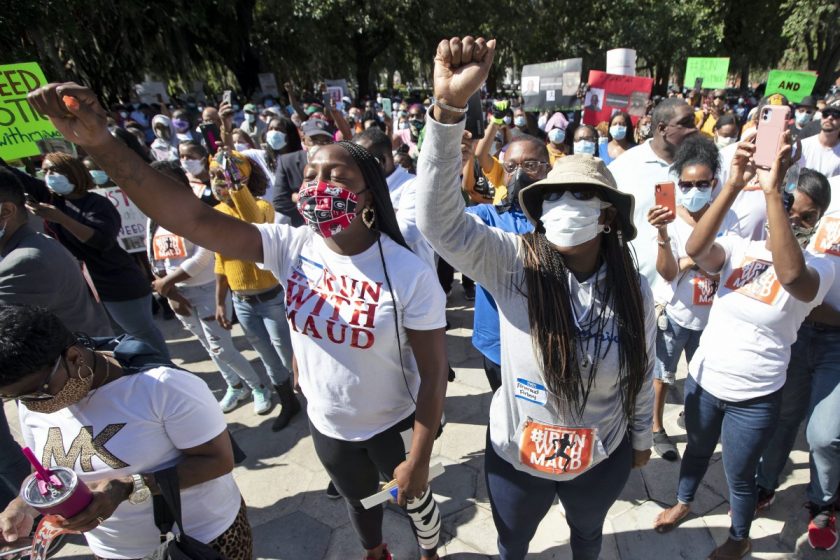
“The difference between me and Ahmaud is I live a life where I take tippy-toe steps to avoid things,” such as the violent confrontation in which Arbery died, said Marshall, who was among hundreds attending a protest Friday outside the Glynn County courthouse. “I shouldn’t have to live in fear.”
The people who call Brunswick, Georgia, home say it’s not the monstrous place it might appear to be in the wake of the slaying of Ahmaud Arbery after a pursuit by two armed white men.
Yes, it is one of Georgia’s poorest cities where much of the black working population has struggled to find opportunities for advancement and where one black resident says he walks on tip toes to avoid racist insults.
But it’s also a city with a black mayor and one where longtime residents say black and white people — all the way back to the civil rights movement — have long worked together to solve thorny questions about racial equality.
Now, Arbery’s slaying as well as the subsequent investigation criticized for being too slow have put Brunswick in the national spotlight and raised questions about whether recent events reflect something rotten in the coastal city’s culture.
On the contrary, residents say, Brunswick has often stood out for its ability to work through troubled times peacefully, though it is far from perfect.

“I don’t think a few bad white people have defined this whole community,” Mayor Cornell Harvey told The Associated Press. “I’m sure there are people who have hidden feelings about race, on an individual level. But I’ve seen this community come together.”
Arbery was killed Feb. 23 in a subdivision called Satilla Shores that is just outside the city limits but considered part of the broader Brunswick community. A white father and son told police they pursued him in their truck because they suspected him of being a burglar. An autopsy showed Arbery was killed by three shotgun blasts, and cellphone video of the shooting led to a national outcry when it hit the internet last week — both for the grisliness of the footage but also because the men had not been arrested, two months after the killing.
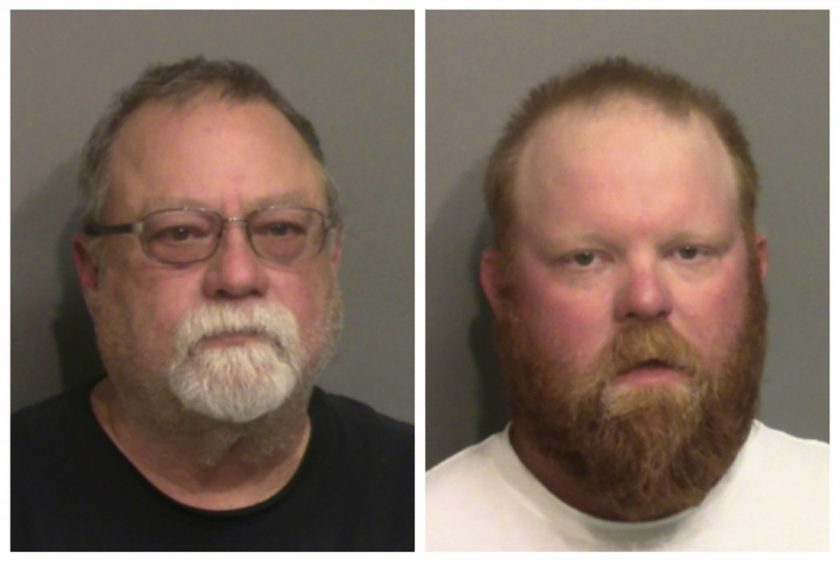
Gregory McMichael, 64, and Travis McMichael, 34 were charged with felony murder and aggravated assault soon after the video leaked.
There have been allegations that race played a role in delaying the arrests, and the state’s attorney general announced an investigation Tuesday into how the case was initially handled, a day after he appointed the third outside prosecutor — an Atlanta-area district attorney who is black — to take over.
Brunswick, with a population of more than 16,000 residents, is more than half black. Surrounding Glynn County is more reflective of the state’s racial makeup: It has more than five times as many people as Brunswick and is 63% white, 27% black and 7% Hispanic.

The Rev. John Perry III, president of the Brunswick branch of the NAACP, moved to the city 13 years ago, and was “pleasantly surprised that the people here have a great heart,” he said.
But he remains concerned by socioeconomic inequality in the city. Much of Brunswick’s black workforce is blue collar, he said, and many lack opportunities to move up the ladder. A recent review of median annual household income data by 24/7 Wall St. found Brunswick was Georgia’s poorest city. The city has a 39% poverty rate, compared to 16.9% in the state overall.
“It’s not that we don’t have a black base that has gone out and educated themselves,” Perry said. “Too many people have been overlooked for better opportunities.”
Still, he does not think the problem is one of “racial hatred.” Instead, he points to the fact that people in power tend to help people they know, and often the people in power are white.
But Ryan Marshall, a 27-year-old black man who has lived in the Brunswick area since he was a young boy, says he has experienced more direct prejudice: His co-workers have called him a racist slur “if I don’t do exactly what I’m supposed to do.”

“The difference between me and Ahmaud is I live a life where I take tippy-toe steps to avoid things,” such as the violent confrontation in which Arbery died, said Marshall, who was among hundreds attending a protest Friday outside the Glynn County courthouse. “I shouldn’t have to live in fear.”
Also at the protest was 82-year-old Robert Griffin, who moved to Brunswick in 1961 as the all-black high school’s band director. Almost everything at the time was segregated, so Griffin joined the local NAACP to work toward integration.
It wasn’t always easy. Griffin remembered a city official who had the public swimming pool filled with dirt rather than allowing white and black people to swim together. But the organization worked with white residents, and many places were integrated without protest or confrontation.
“We desegregated this whole county without bloodshed,” Griffin said, while nearby cities had “fighting in the streets.”
Even in the wake of Arbery’s killing, Griffin insisted there’s more unity than racial unrest in Brunswick.
“I saw a bunch of angry folks, blacks and whites” at Friday’s protest, he said. “We’ve always had that kind of support in this community.”
Johnny Cason, a 76-year-old lifelong Brunswick resident who is a city commissioner, agreed.
“This thing has broken my heart, and it’s so wrong,” said Cason, who is white. “But this is a great place, and the world needs to know about it.”
Roxane George noted that some residents in the area fly the Confederate battle flag, a banner people associate with both racism and pride in southern heritage. But she also pointed to a recent anti-racism training she co-facilitated at the city’s Robert S. Abbott Race Unity Institute.

“People in this community overwhelmingly stand ready to do what they think is needed to address” racism, said George, who is white. Ahmaud’s killing “is not just an issue that people here say is one for the black community. Black, brown, white — we’ve all felt this was extremely hurtful.”
Harvey, the mayor, agreed the city has work to do and suggested white residents could reflect on their biases: “When you see me, what do you see? What are you thinking about me?”
___
Bynum reported from Savannah, Georgia. Morrison reported from New York and is a member of The Associated Press’ Race and Ethnicity team. Follow him on Twitter at https://twitter.com/aaronlmorrison.
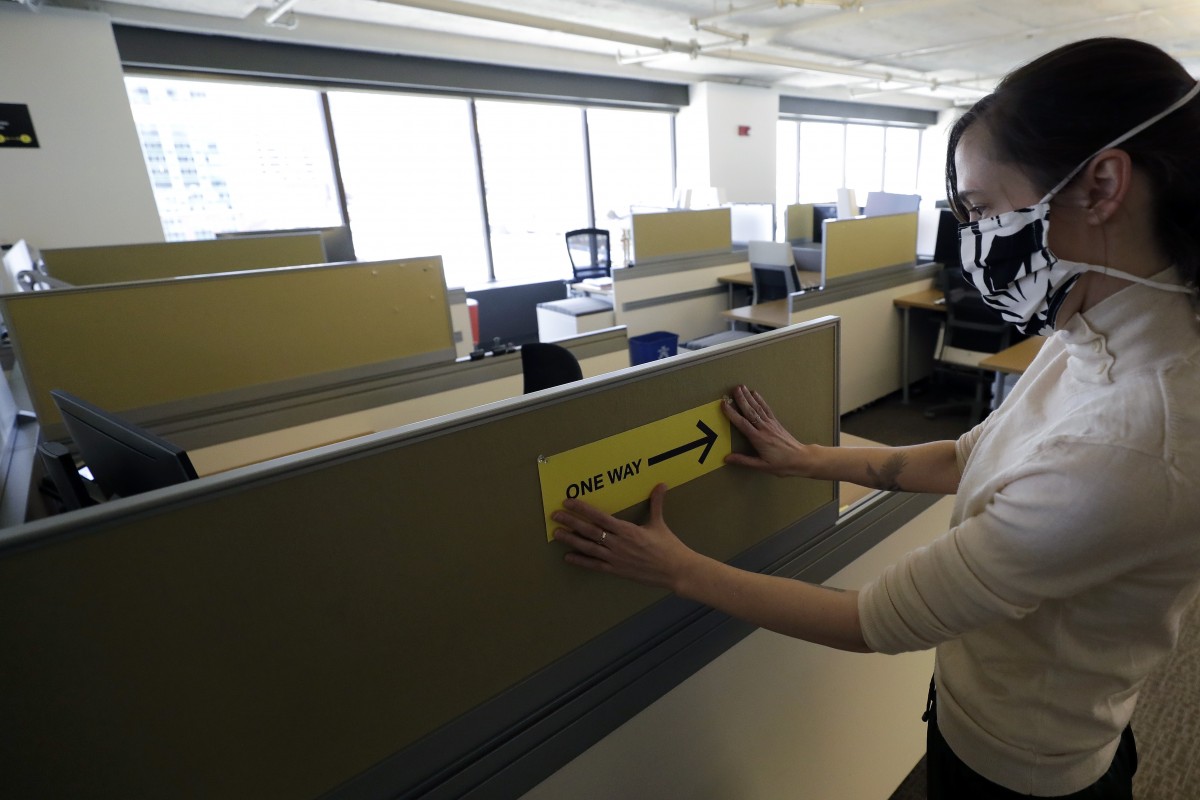
Changes will begin with the commute as workers arrive in staggered shifts to avoid rush hour crowds. Staff might take turns working alternate days in the office to reduce crowding.
LONDON (AP) — Office jobs are never going to be the same.
When workers around the world eventually return to their desks, they’ll find many changes due to the pandemic. For a start, fewer people will go back to their offices as the coronavirus crisis makes working from home more accepted, health concerns linger and companies weigh up rent savings and productivity benefits.
For the rest, changes will begin with the commute as workers arrive in staggered shifts to avoid rush hour crowds. Staff might take turns working alternate days in the office to reduce crowding. Floor markings or digital sensors could remind people to stand apart and cubicles might even make a comeback.
“This is going to be a catalyst for things that people were too scared to do before,” said John Furneaux, CEO of Hive, a New York City-based workplace software startup. The pandemic “gives added impetus to allow us and others to make changes to century-old working practices.”
Hive plans to help employees avoid packed rush hour subway commutes by starting at different hours, said Furneaux, who tested positive for COVID-19 antibodies. In Britain, the government is considering asking employers to do the same.
At bigger companies, senior executives are rethinking cramming downtown office towers with workers. British bank Barclays is making a “long-term adjustment in how we think about our location strategy,” CEO Jes Staley said. “The notion of putting 7,000 people in a building may be a thing of the past.”
That is already happening in China, where lockdowns started easing in March. Beijing municipal authorities limited the number of people in each office to no more than 50% of usual staffing levels, required office workers to wear face masks and sit at least 1 meter (3.3 feet) apart.
At a minimum, the COVID-19 crisis could be the death knell for some recent polarizing office trends, such as the shared workspaces used by many tech startups to create a more casual and creative environment. Cubicles and partitions are making a return as the virus speeds the move away from open plan office spaces, architects say.
Design firm Bergmeyer is reinstalling dividers on 85 desks at its Boston office that had been removed over the years. That “will return a greater degree of privacy to the individual desks, in addition to the physical barrier which this health crisis now warrants,” said Vice President Rachel Zsembery.
There’s no rush to return. At Google and Facebook, employees will be able to work remotely until the end of the year. Other firms have realized they don’t even need an office.
Executives at San Francisco teamwork startup Range had given notice on their office because they wanted someplace bigger. But when California’s shelter in place order was issued, they instead scrapped their search and decided to go all remote indefinitely, a move that would save six figures on rent.
“We were looking at the writing on the wall,” said co-founder Jennifer Dennard.
One upside of having an all-remote workforce is that the company can hire from a broader pool of candidates beyond San Francisco, where astronomical housing costs have priced out many. But Dennard said the downside is that it eliminates the “chaotic interruptions” – the chance encounters between staff members that can spark creativity, so the company is planning more online collaboration.
Good Brothers Digital, a public relations firm in Wales, also ditched its office space in downtown Cardiff. Director Martyn John said productivity is just as high as it was before the pandemic forced them to work from home, so he decided to give up the company’s office space to save on rent, one of his biggest expenses.
Why drag employees into the office if they’re happier working from home, he reasons.
“People are just going to expect it now.”
Many changes are expected to remain in place even after the COVID-19 threat ends, as companies prepare for new disease outbreaks or other emergencies.
The work from home trend will only continue to accelerate, according to consultancy Gartner.
After the pandemic, 41% of employees expect to work remotely at least some of the time, up from 30% before the outbreak, according to 220 human resources executives it surveyed. Workers who do return will likely welcome wearing office attire once again as a signal things are going back to normal, Gartner said.
Not all companies can go fully remote, especially big corporations with thousands of staff. Even so, they’re thinking carefully about who should return to the office and who can and should continue to work from home.
At Dell, more people are going to work from home but “we’re still going to need offices,” because some jobs are best done there, said Chief Digital Officer Jen Felch. She cited customer support staff, who can access more resources at the office to diagnose equipment problems.
More than 90% of Dell’s 165,000 full-time global staff are working remotely during the pandemic, compared with 30% before it started. Once lockdown sends, she estimates that number will be above 50%.
The outbreak is also going to force companies to take hygiene much more seriously.
“The amount of people cleaning and sanitizing an office is going to shoot through the roof,” said Brian Kropp, Gartner’s chief of human resources research.
Extra attention will go to places like conference rooms, which will have to be cleaned between uses, bringing added disruption, he said.
Or companies could do away with in-person meetings altogether.
“What’s the point of sanitizing everybody’s desk if you’re getting them all in the same room,” said Hive’s Furneaux, who said he’s thinking carefully about how to hold events such as “all-hands meetings” for his 70 staff. “We might get the weird scenario of in-office conference calls.”
High tech solutions will play a role, such as sensors to remind people to maintain social distancing, said Joanna Daly, vice president for corporate health and safety at IBM.
Existing industrial sensor technology could easily be adapted to offices, said Daly.
One possible example: “We’d want our phones to buzz if we got closer than 2 meters while we were having a conversation,” she said.

This case is eerily similar to the killing of Trayvon Martin eight years ago.